
The next chokepoint, the next conflict
Modern power is not just about armies; it is about controlling bottlenecks, as we have seen with the war between the United States (US), Israel, and Iran. When the Strait of Hormuz first closed, the world felt it immediately through fuel prices, freight costs, and the quiet panic of logistics departments at companies that had never once thought about Iranian foreign policy.
This is not a new lesson, but it clearly needed to be relearned. A single narrow passage, controlled or contested by the right actor at the right moment, can hold the global economy hostage.
Oil chokepoints are visible and you can see them on maps from a Google Image search. But what is less understood, and considerably more consequential over the next decades, is a chokepoint that does not appear on any oil map at all.
The semiconductor economy is the new oil economy
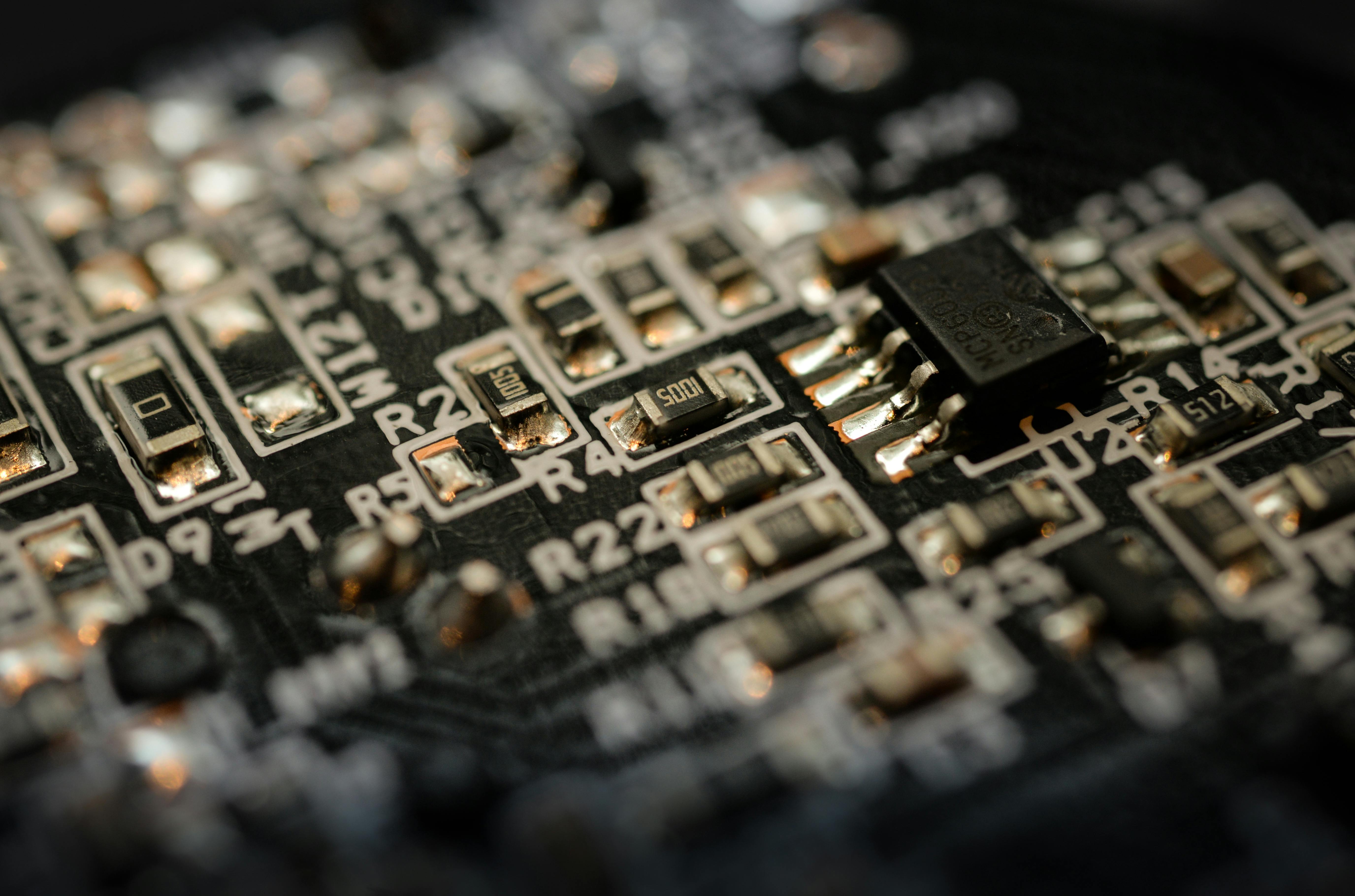
The global semiconductor market is growing at roughly 20-25% per year, driven by artificial intelligence infrastructure, electric vehicles, and advanced defence systems. Every significant capability that modern militaries and economies are racing to build runs on chips. A single Javelin anti-tank missile requires over 250 of them.
What makes this strategically significant is not the size of the market, but its concentration. The Taiwan Semiconductor Manufacturing Company (TSMC) produces virtually all the world’s most advanced chips at the frontier nodes where performance matters. Unlike global oil supply where there is a diverse range in sources, for semiconductors, there is no substitute. If TSMC goes offline, the global electronics industry stops.
Markets are beginning to price this reality despite ongoing conflict in the Middle East. In April 2026, the Philadelphia Semiconductor Index closed higher for 18 consecutive trading sessions, the longest such streak on record. Semiconductor stocks during the streak accounted for over 16% of the S&P 500’s total market capitalisation, that is triple their weight at the 2022 trough, and significantly above the peak of the dot-com era. Investors are rotating out of software and into chips at an unprecedented rate.
China’s quiet leverage
Here is where China’s strategic picture becomes genuinely alarming. Semiconductors manufacturing requires a specific set of critical minerals, and China has spent decades ensuring that it dominates the production, processing, and refining of nearly all of them (silicon, gallium, germanium, rare earths, tungsten, and others). This has positioned Beijing to inflict serious damage on US semiconductor capacity without committing a single act of conventional warfare (yet).
China does not necessarily need to invade Taiwan to deny the West access to advanced chips. The mineral chokepoint and the manufacturing chokepoint are distinct levers, and China holds meaningful control over both. A conflict over Taiwan may ultimately be less about the island itself than about who controls what flows through it along with the inputs needed to keep it producing.
What this means for the next decade
The competition over semiconductors is already reshaping diplomacy, industrial policy, and military planning across the major powers. The US CHIPS Act, export controls on advanced chip technology to China, and the scramble to establish alternative manufacturing capacity in Japan, South Korea, and Europe are all expressions of the same underlying anxiety: the world’s most strategically critical industry is concentrated in one place, and that place sits at the centre of the most dangerous territorial dispute of our time.
The Taiwan question has an additional layer besides democracy and self-determination, it’s who controls the commanding heights of the 21st century economy. Control of Taiwan, or the credible threat of denying Taiwan’s productive capacity to adversaries, is arguably the single highest-leverage geopolitical move available to any actor in the world today.
South Africa’s exposure
In 2025, South Africa imported over R4.5 billion worth of semiconductor devices, with the overwhelming majority sourced from China. The country also experiences, briefly, the sharp end of semiconductor geopolitics when Taiwan imposed, and the quickly suspended, export restrictions on chips to South Africa amid a diplomatic dispute over the status of Taiwan’s representative office in Pretoria.
The episode was resolved swiftly, but the underlying tension remains. South Africa’s alignment with Beijing in the BRICS framework, and its 2023 decision to ask Taiwan to relocate its representatives out of the capital, have placed the country in a structurally uncomfortable position. Being dependent on global semiconductor supply chains yet diplomatically entangled with the actor most likely to disrupt them.
The next chokepoint and conflict are Taiwan and its global semiconductor monopoly, that is known. What remains unclear and undefined is South Africa’s geopolitical strategy when this inevitable geopolitical event kicks off.