
Why SA cannot subsidise its way out of becoming a failing state
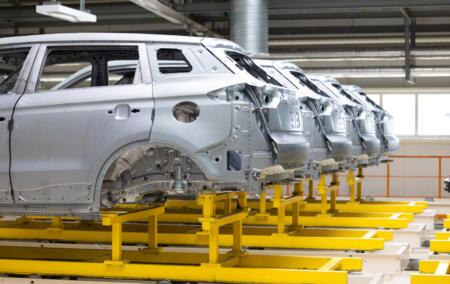
South Africa is once again arguing about the Automotive Production and Development Programme (APDP). The key question is not whether this one programme pays for itself, but whether South Africa can keep subsidising firms and sectors while the basic services those firms depend on keep failing.
The simple answer is that it cannot; not indefinitely, and not at current levels of dysfunction.
Start with the evidence on what government spending actually buys. A 2023 UNU-WIDER paper by Du Rand, Hollander and Van Lill put South Africa’s government consumption multiplier at 0.16, and its investment multiplier at negative 0.12. Both estimates are not statistically different from zero.
The South African Reserve Bank’s modelling found the overall fiscal multiplier had fallen to roughly zero by 2019. Other academic estimates place the spending multiplier a little higher, generally below one, well short of the multipliers above one that justify large-scale stimulus in textbook economics. A rand spent by the South African state today buys less growth than the same rand spent a decade ago, and in some categories, it may buy none at all.
This matters substantively for the subsidy debate. A subsidy or duty rebate is a form of government spending. If the broader fiscal multiplier is near zero, there is no reason to assume that spending routed through an industrial support programme escapes that pattern. The relevant question for any subsidy is not what it earns in isolation. It is what it earns, given the state of everything else the recipient firm needs to work with.
And in South Africa, everything else is in poor shape. While electricity supply has stabilised recently, availability was not the long-term trend. And electricity prices are only going one way. Transnet moved 226 million tonnes of freight by rail in 2017 and 154 million tonnes in 2022, a drop of more than 30% in five years.
The World Bank puts the annual cost of crime to the South African economy at 9.6% of GDP, split between transfer costs, protection costs and lost opportunity. The Global Organised Crime Index ranks South Africa seventh-worst globally for criminality. Municipal water and sanitation failures have become so common that companies such as Astral Foods have had to secure their own water licences, because the municipality they operate in could no longer supply water.
Cost that lands on business
Every one of these failures is a cost that lands on business before a single rand of subsidy, support, or ‘stimulus’ is paid. A manufacturer that qualifies for duty rebates under the APDP still has to run backup generators through load shedding and/or electricity outages, still has to reroute exports by road because the railway cannot be trusted, still has to budget for security and theft, and still may have to sink capital into its own water infrastructure.
The subsidy does not remove these costs; it offsets a portion of them, quietly, and in doing so, rather than reducing the cost of operating in South Africa, it simply disguises the true cost.
Subsidies paid into an environment where electricity, logistics, crime and water are all failing do not build competitive industry. They build firms that are competitive only on paper, propped up by transfers that compensate for state failure rather than rewarding genuine productivity.
An ever-smaller economy and subsidy circle is the natural outcome when support is layered onto broken enablers instead of following from fixed ones.
Should be scrapped
This isn’t to say industrial policy is inherently wrong, or that every incentive scheme should be scrapped tomorrow. The argument is that the order of operations matters. Fix the electricity supply; fix the freight network; bring down the cost of crime to business; resolve the water crisis in the municipalities that host industry. Only once those enablers are working should the state ask which sectors deserve further support, and on what terms.
Doing it the other way round – subsidising first and hoping the basics catch up later – is what South Africa has been doing for two decades. If continuing to underwrite the same shortfalls is what is meant by supporting an industry, that support does not build growth; it merely borrows time. And South Africa is running out of time to keep making that trade.